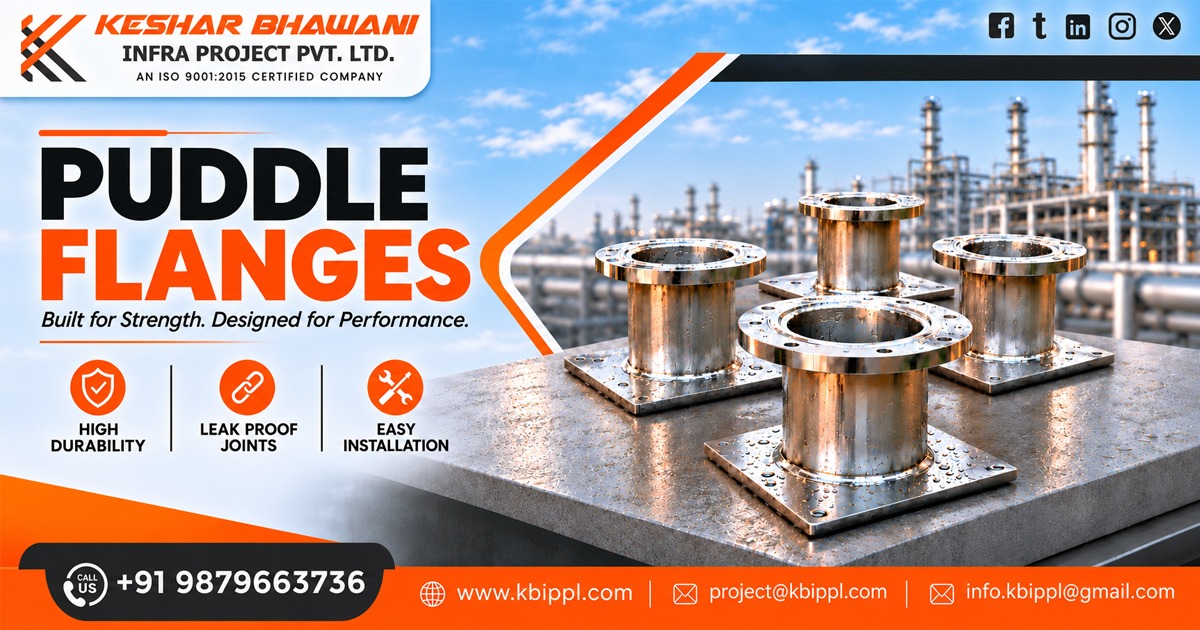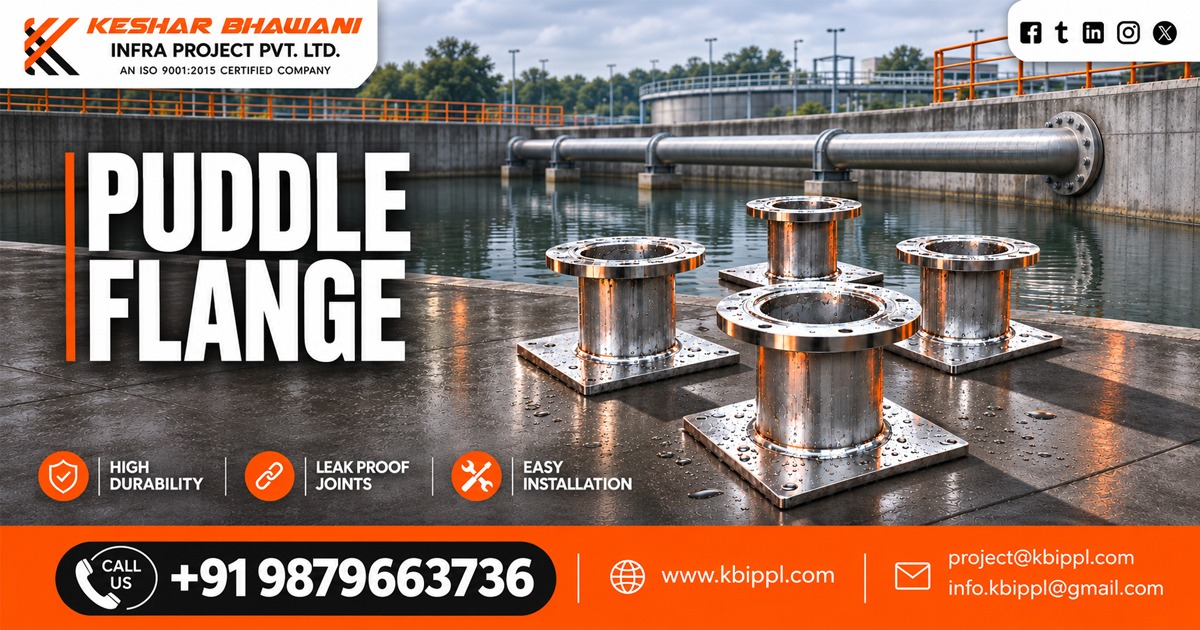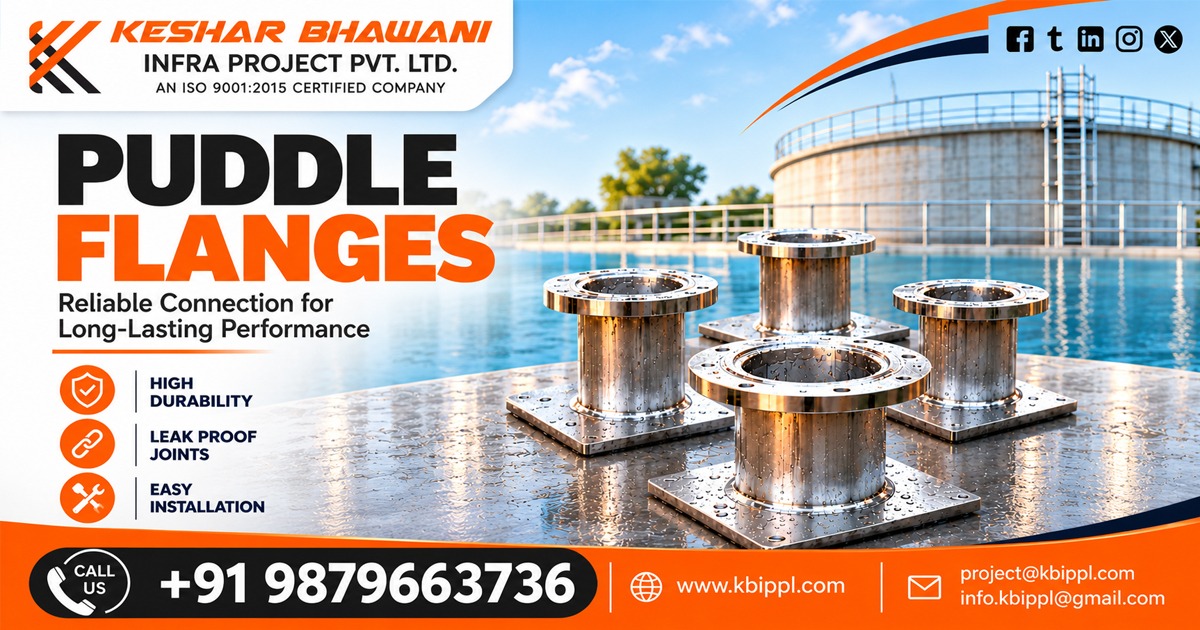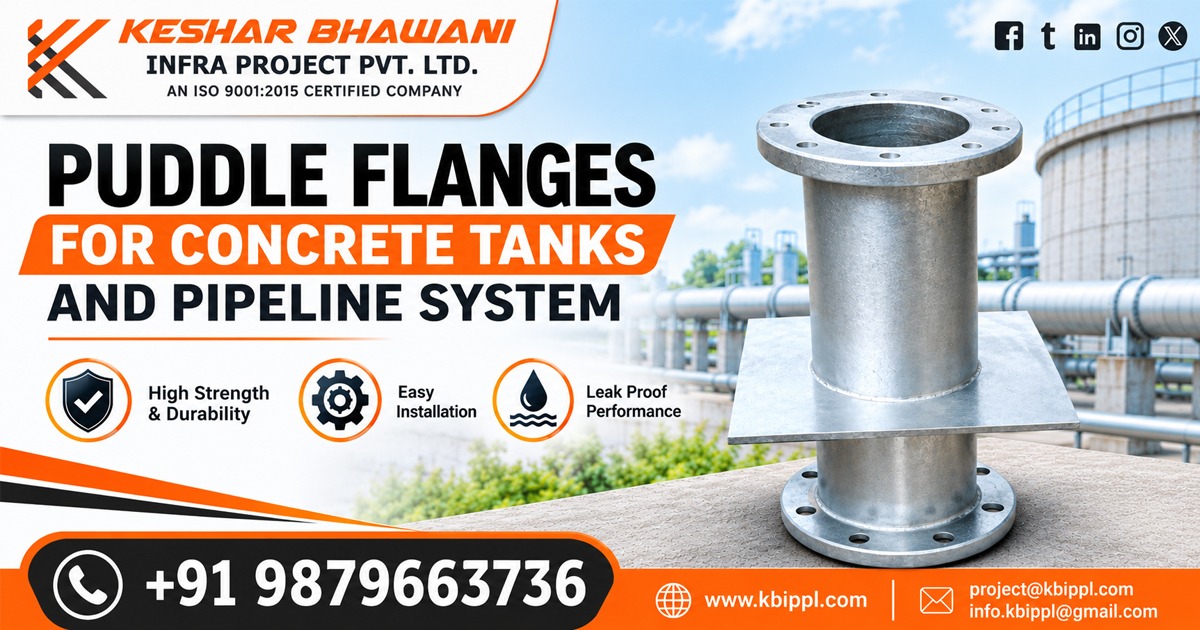

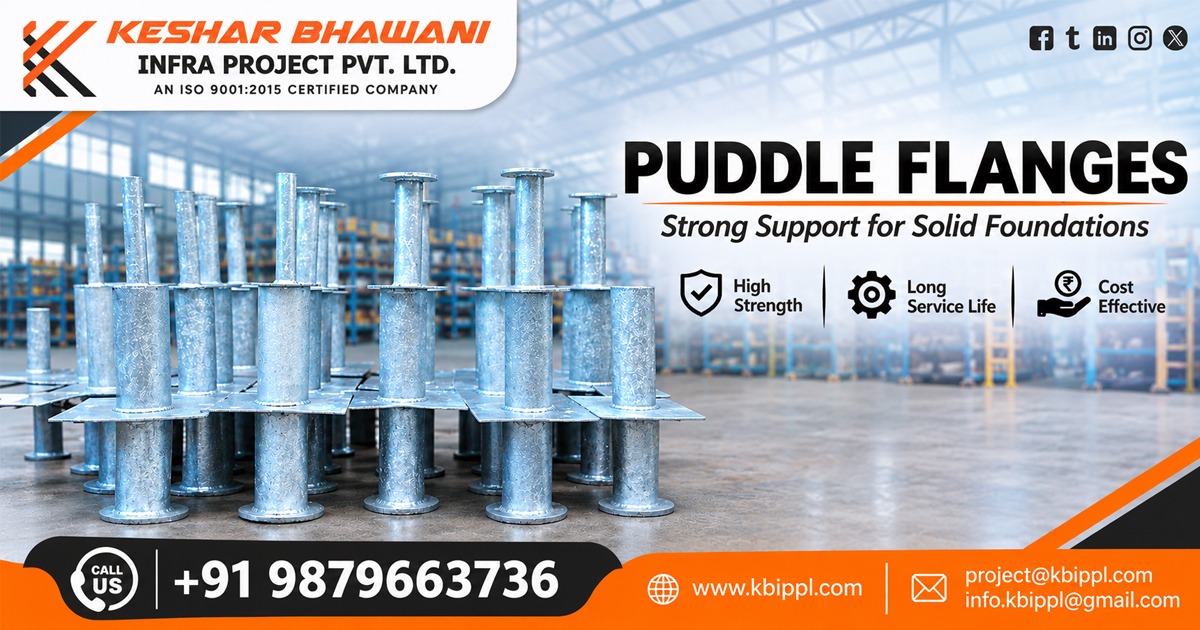
Puddle Flanges for Concrete and Pipeline Installations help prevent water seepage around pipe penetrations in concrete structures. For projects in Ahmedabad, Keshar Bhawani Infra Project Pvt. Ltd. provides industrial infrastructure and fabrication support for planned piping requirements.
How a Puddle Flange Protects Pipe Penetrations in Concrete
When a pipeline passes through a concrete wall, floor, tank or underground structure, the gap between the pipe and concrete can become a leakage path.
A puddle flange addresses this problem through a metal plate or collar fitted around the pipe.
Its primary functions include:
- Water Seepage Control: Creates a barrier against water travelling along the pipe’s outer surface.
- Pipe Positioning: Helps maintain the intended pipe position within the concrete structure.
- Structural Integration: Becomes embedded in the concrete during construction.
- Leakage Prevention: Reduces the risk of water migration around pipe penetrations.
The flange works by interrupting the direct path between the pipe surface and surrounding concrete. It is particularly relevant to water-retaining structures and below-ground installations.
Where These Components Become Part of Infrastructure Projects
Typical project applications include:
- Water Storage Tanks: Pipe entry and exit points in concrete reservoirs.
- Sewage Treatment Plants: Pipeline penetrations in treatment chambers and tanks.
- Underground Pump Rooms: Pipe connections through below-ground concrete walls.
- Industrial Water Systems: Utility pipelines passing through concrete structures.
- Basements and Retaining Walls: Service pipe openings where groundwater seepage needs to be controlled.
- Water Treatment Facilities: Pipe passages through concrete tanks and process chambers.
The actual requirement depends on the structure, water pressure, pipeline arrangement and construction design.
What Determines the Right Flange Dimensions and Configuration?
Buyers and project engineers should evaluate the following:
1. Pipe Diameter
- Confirm the nominal pipe size and actual outside diameter.
- Ensure the flange opening matches the pipe arrangement.
- Check compatibility with the intended pipe material.
2. Flange Plate Dimensions
- Verify the outer diameter or overall plate dimensions.
- Consider the available concrete wall or slab thickness.
- Ensure adequate clearance around the embedded plate.
3. Material Selection
- Identify whether the installation requires mild steel, stainless steel or another specified material.
- Consider moisture exposure and the surrounding environment.
- Confirm the proposed material against project drawings.
4. Pipeline Connection
- Identify whether the pipe ends require welded, flanged or other connections.
- Check the required pipe projection on both sides.
- Coordinate the flange position with adjoining fittings and equipment.
5. Operating Conditions
- Consider water pressure and service conditions.
- Review whether the structure holds water continuously or experiences intermittent exposure.
- Check whether additional waterproofing provisions are required.
These details help avoid dimensional mismatches and installation complications.
How the Component Is Integrated During Concrete Construction
The installation sequence should be coordinated with the civil and piping teams because the embedded flange cannot be repositioned easily after concrete placement.
Step 1 – Review the Engineering Drawing
Confirm the pipe diameter, flange dimensions, wall thickness, penetration location and connection arrangement.
Step 2 – Prepare the Pipe Assembly
Check the pipe and attached flange for dimensional accuracy, alignment and fabrication defects.
Step 3 – Position Before Concrete Pouring
Place the assembly at the designated wall or slab penetration. Secure its position according to the approved construction arrangement.
Step 4 – Concrete Placement
Concrete is placed around the embedded plate. Proper consolidation around the assembly is important to avoid voids and weak contact areas.
Step 5 – Inspection and Pipeline Connection
After the concrete has cured, inspect the penetration area and complete the adjoining pipeline connections according to the project design.
Important: The embedded plate provides a water barrier at the pipe-to-concrete interface. It does not replace pipe-joint sealing, concrete construction joints or other waterproofing provisions where these are required.
Fabrication and Quality Checks Before Dispatch
Dimensional errors or poor fabrication can create problems during concrete construction. Therefore, inspection should take place before the component reaches the project site.
Important inspection points:
- Pipe Opening: Verify that the opening matches the specified pipe dimensions.
- Plate Geometry: Check the flange’s outside dimensions and thickness against the approved drawing.
- Weld Inspection: Examine the connection between the pipe and flange plate for visible defects.
- Alignment: Confirm that the flange is positioned correctly around the pipe.
- Surface Condition: Check for corrosion, damage, sharp edges and fabrication irregularities.
- Documentation: Match the supplied assembly with the approved drawings and purchase specifications.
For project-specific orders, buyers should also confirm the inspection requirements, material details and any applicable testing documentation before dispatch.
Installation Problems That Can Affect Long-Term Performance
Even a correctly selected component may not perform as expected if its position or surrounding concrete is not properly managed.
| Common Issue | Possible Cause | Practical Check |
| Water seepage around pipe | Poor concrete consolidation | Inspect the penetration area |
| Flange misalignment | Incorrect positioning before pouring | Check the approved installation drawing |
| Incorrect pipe connection | Dimensional mismatch | Verify pipe diameter and connection details |
| Corrosion around the assembly | Unsuitable surface protection | Review material and coating requirements |
| Concrete voids | Inadequate placement around the flange | Check concrete quality and consolidation |
| Leakage at pipe joints | Separate connection sealing issue | Inspect the pipeline joint independently |
Preventive maintenance considerations:
- Inspect accessible pipe penetration areas for moisture or leakage.
- Check exposed metal surfaces for corrosion.
- Monitor adjoining pipe connections for signs of leakage.
- Review waterproofing conditions around the concrete structure.
- Arrange corrective work based on the project engineer’s recommendations.
Services
For industrial piping and concrete infrastructure requirements, the following project activities are relevant:
- Requirement Assessment: Reviewing pipeline drawings, dimensions and project specifications.
- Product and Fabrication Coordination: Discussing pipe size, flange plate dimensions and material requirements.
- Site Inspection and Planning: Checking installation locations and coordinating with civil construction teams.
- Installation and Commissioning Assistance: Supporting project execution and coordination during installation.
Location
Gujarat has several industrial and infrastructure development zones where concrete tanks, utility networks, water treatment facilities and pipeline installations form part of project requirements. Keshar Bhawani Infra Project Pvt. Ltd. provides manufacturing support from Ahmedabad, Gujarat, for relevant industrial infrastructure requirements across Ahmedabad, Sanand, Changodar, Bavla, Dholka, Naroda, Odhav, Vatva, Gandhinagar, Kalol, Mehsana, Kadi, Chhatral, Vadodara, Makarpura, Halol, Anand, Nadiad, Bharuch, Ankleshwar, Dahej, Surat, Vapi and Rajkot.
Project Coordination With Keshar Bhawani Infra Project Pvt. Ltd.
Selecting an embedded piping component requires coordination between fabrication drawings, pipeline specifications and civil construction requirements.
Keshar Bhawani Infra Project Pvt. Ltd. works across industrial infrastructure, pipeline projects, fabrication and civil solutions.
For puddle flange requirements, project buyers can discuss:
- Required pipe diameter and flange dimensions.
- Fabrication details and material specifications.
- Project drawings and installation arrangements.
- Site inspection, installation and commissioning coordination.
The company operates with manufacturing support from Ahmedabad, Gujarat, India.
Visit the official website, https://kbippl.com/, to explore its industrial products and project-related information.
Frequently Asked Questions
Q: What is the main purpose of a puddle flange in a concrete wall?
A: It creates a water barrier around a pipe penetration by interrupting the path through which water could travel between the pipe and surrounding concrete.
Q: Can puddle flanges be used in underground water tanks?
A: Yes. They are commonly used where pipelines pass through underground water tanks, reservoirs and other water-retaining concrete structures. The design must suit the operating conditions.
Q: What information is needed before ordering a puddle flange?
A: Buyers should provide pipe diameter, material, flange dimensions, plate thickness, wall thickness, connection type and project drawings to establish the correct configuration.
Q: Does a puddle flange eliminate the need for additional waterproofing?
A: No. It addresses water migration around the pipe penetration. Concrete joints, pipe connections and other waterproofing requirements must be assessed separately.
Conclusion
Puddle flanges help manage leakage risks at pipeline penetrations in concrete tanks, underground chambers and industrial structures. Correct dimensions, material selection, fabrication inspection and installation coordination are essential. Project buyers in Ahmedabad and across Gujarat can discuss their requirements with Keshar Bhawani Infra Project Pvt. Ltd.
Planning a concrete pipeline installation or industrial water infrastructure project?
Contact Keshar Bhawani Infra Project Pvt. Ltd. to discuss puddle flange dimensions, fabrication requirements, product selection and project coordination.
Website: https://kbippl.com/
Call Us: +91 9879663736
Mail Us: project@kbippl.com
info.kbippl@gmail.com